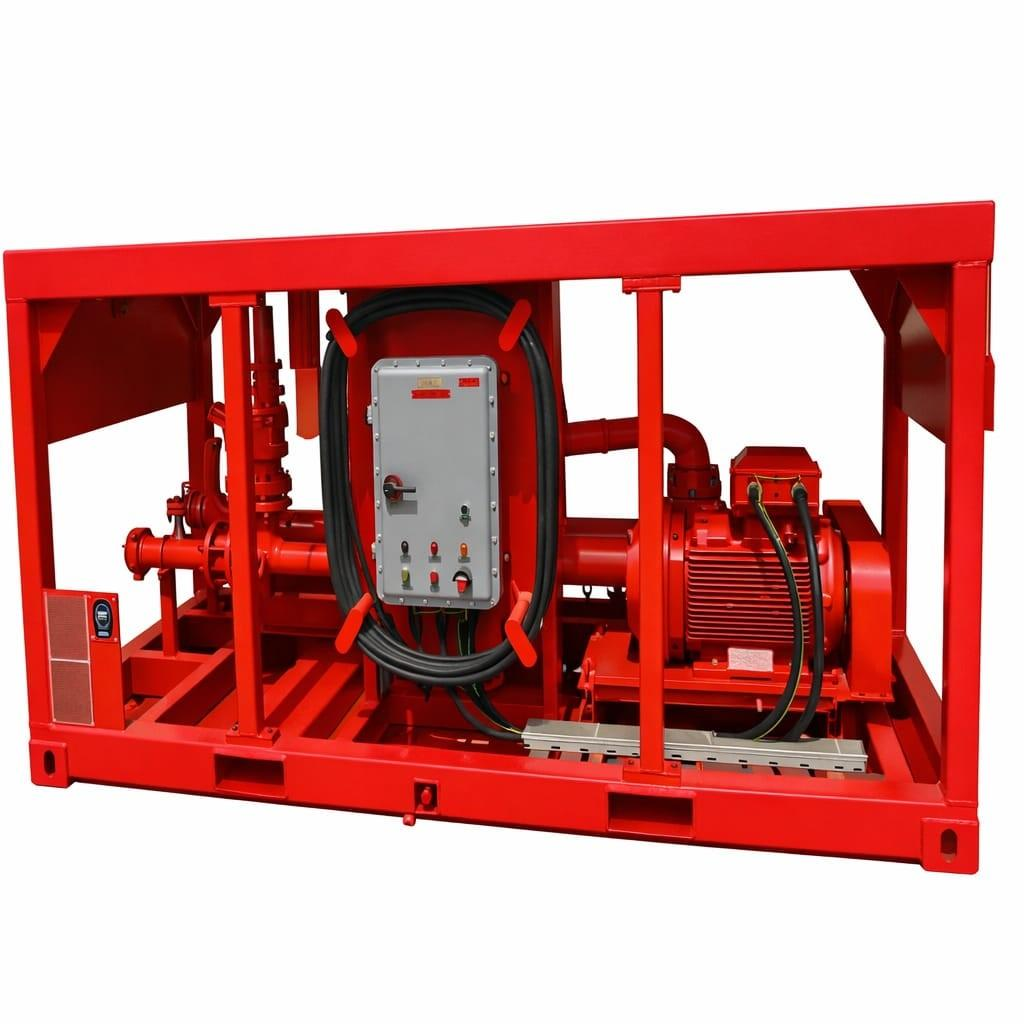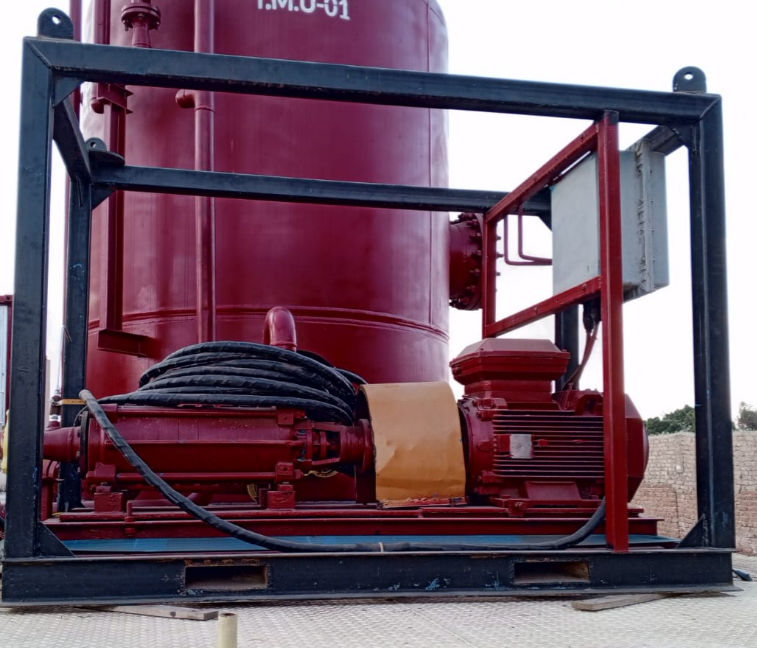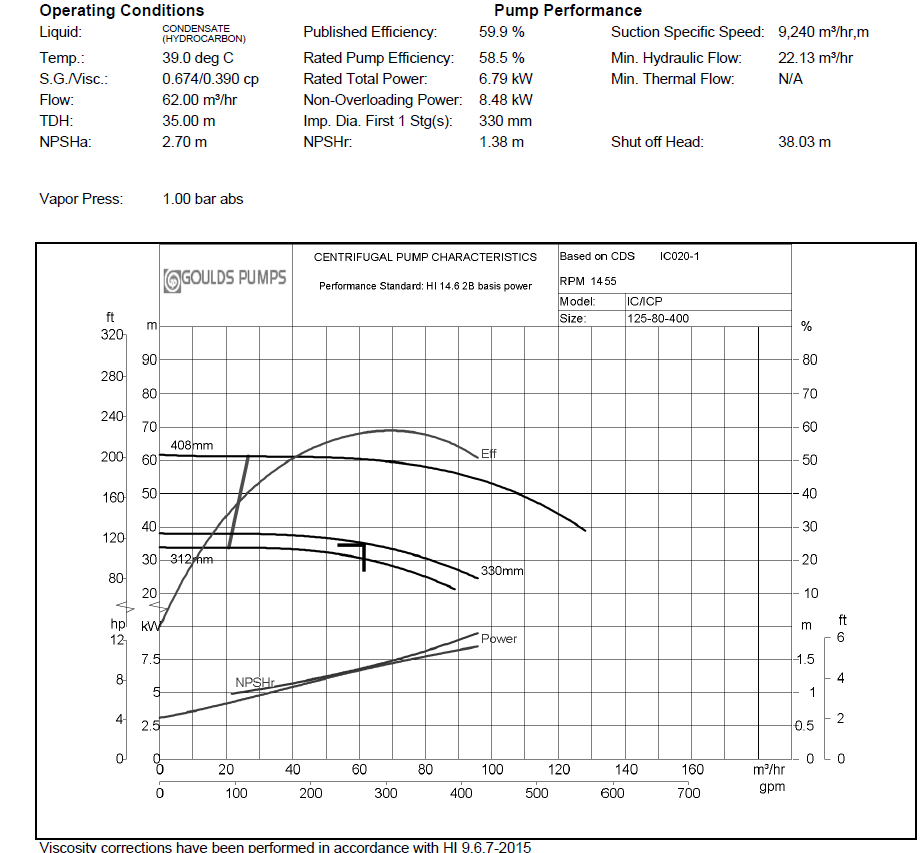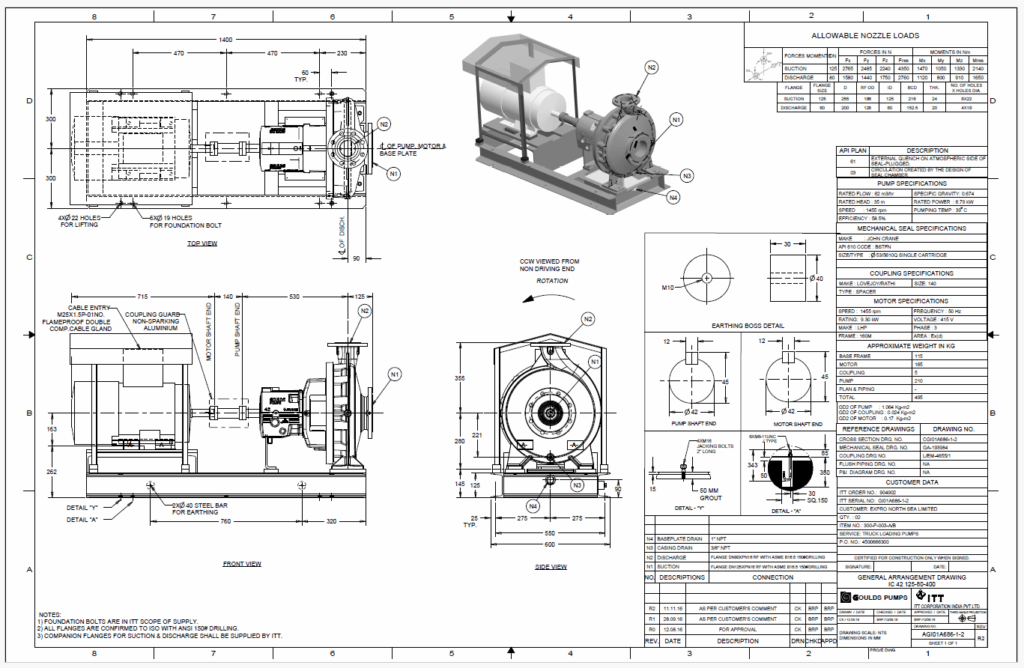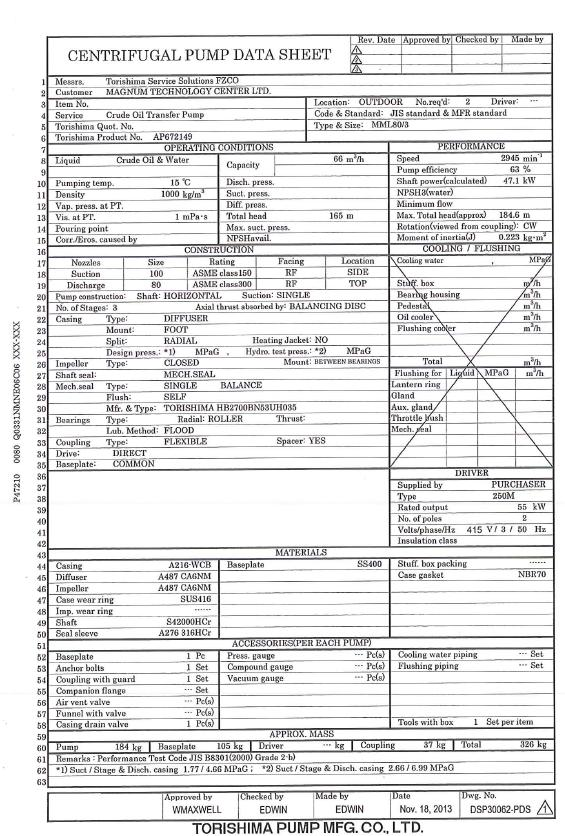


Transfer pumps are used to transfer crude oil from the test tanks to a pipeline or storage tank, or to supply oil to a crude oil burner for disposal. These pumps may be driven electrically or by diesel or gas engines. Electric drivers are preferred in offshore situations with ample power, while diesel drivers are typically used on land locations where the pump can be placed away from the well-test equipment.
The pumps are generally horizontal, end-suction centrifugal pumps with mechanical seals. They supply oil to the burner when there is not enough pressure for the well effluent to atomize and burn cleanly through the burner. Additionally, they may be used to reinject the effluent into the flowlines after flowing through the production test units.
The units can be controlled manually using high/low level switches in the stock tanks, or by means of a level controller and a system of control valves. Controls always include a pneumatic shutdown to simplify tying into the Emergency Shutdown System.
Features and Benefits:
- Electrically driven transfer, 3-phase motor: The explosion-proof control box contains a soft start system.
- Skid mounted.
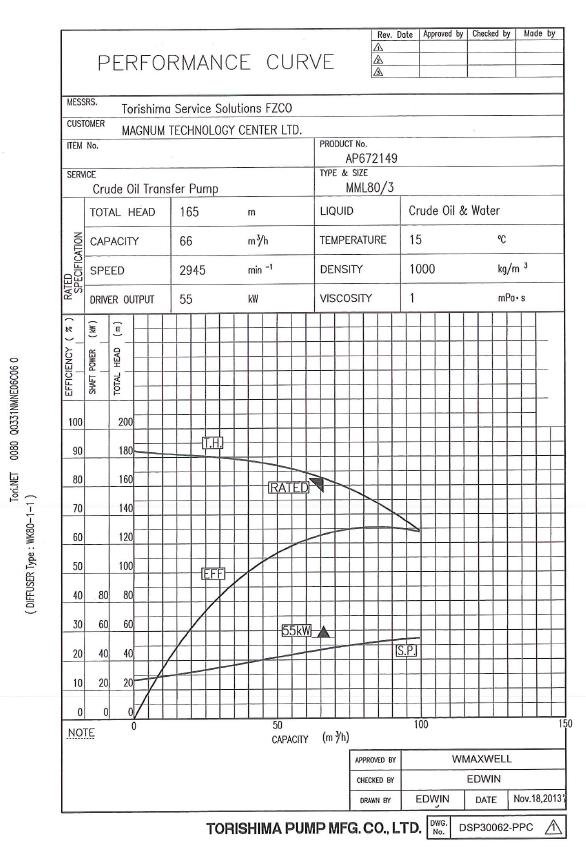
- High-performance centrifugal units deliver a constant pressure without the pulsing that occurs with piston-type pumps.
- Single, twin, or triple diaphragm pumps: Have a small footprint and offer flexibility within the well test areas.
- Triple air pumps: Offer flexibility during fluid transfer from multiple storage tanks.