

Steam Generators are used to supply steam to parts of the surface test package such as Steam Heat Exchanger, Tank heating coils, etc.
The steam is used to heat the process fluid to raise fluid temperature, aid separation, and prevent the formation of hydrates. The process fluid is passed through coils or tubes, and the steam is passed around the outer surface of the coils or tubes. The heat is transferred through the surface area of metal exposed to the steam. The larger the surface area contact between the steam and the process fluid, the greater the heat transfer.
The steam condenses in the equipment, and the hot water can be returned to the steam generator or discharged.
The steam generator is connected to the equipment via high-temperature rubber hoses. The steam inlet to the equipment is also fitted with double check valves to prevent flow back of hydrocarbons in the event of coil rupture in the equipment.
The steam generators can be either ‘Safe Area’ or ‘Zoned’ units, giving flexibility to either position them away from the well test equipment or have it sited in the test area.
Features and Benefits
• Use of multiple units allows flexibility in the system
• Units can be built into skids for ease of transportation and handling
• Available in various sizes and configurations
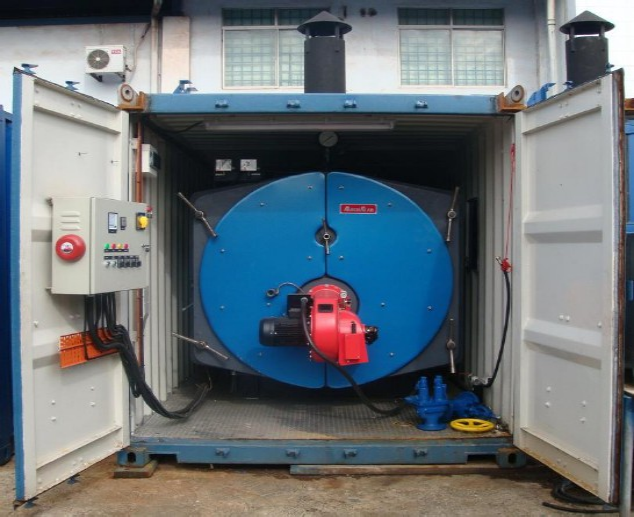
Steam Generator Specifications
| Capacity (BTU/Hr) | Discharge Pressure (psig) | Discharge Temperature (F) | Fuel | Fuel Consumption | Water Consumption | Skid Length (in) | Skid Width (in) | Skid Height (in) | Skid Weight (lbs) |
|---|---|---|---|---|---|---|---|---|---|
| 5-6 MM | 30-150 | 271-363 | Diesel | 2000 lb/hr @ 12 GBH | 4000 lb/hr @ 24 GBH | 4500 lb/hr @ 30 GBH | 1000 lb/hr @ 100 GBH | 3000 lb/hr @ 300 GBH | 4500 lb/hr @ 450 GBH |
Other sizes, configurations, and pressure ratings are available.
These ratings are guidelines only. For more information, contact your local Apex Petroleum Services representative.